Tag: simplelearning

  • How to learn and understand about stock market step by step

    How to learn and understand about stock market step by step

    Learning about the stock market can seem overwhelming, but with the right approach, it can be a rewarding and fulfilling experience. Here are some steps you can follow to learn about the stock market:

    1. Start with the basics: Learn the fundamental concepts of the stock market such as stocks, bonds, mutual funds, exchange-traded funds (ETFs), and other investment products. This will help you understand the key terms and concepts used in the stock market.
    2. Read books and articles: There are many books and articles available that can help you learn about the stock market. Some good starting points include “The Intelligent Investor” by Benjamin Graham, “A Random Walk Down Wall Street” by Burton Malkiel, and “The Little Book of Common Sense Investing” by John C. Bogle.
    3. Take an online course: There are many online courses available that can help you learn about the stock market. Some popular platforms include Coursera, Udemy, and edX. These courses are often taught by experts in the field and can provide a structured learning experience.
    4. Follow financial news: Follow financial news sources such as Bloomberg, CNBC, and the Wall Street Journal to stay up-to-date with the latest developments in the stock market. This will help you understand the factors that drive the stock market and the impact of current events on stocks.
    5. Practice with virtual trading: Many online platforms offer virtual trading, which allows you to practice trading stocks without risking real money. This can be a great way to gain practical experience and test out different strategies.
    6. Attend seminars and workshops: Many financial institutions, brokerages, and trading firms offer seminars and workshops on the stock market. Attending these events can help you learn from experts and network with other traders.
    7. Consult with a financial advisor: If you have specific questions or concerns about the stock market, consult with a financial advisor who is well-versed in stock market investing. They can provide personalized advice and help you make informed investment decisions.

    In summary, learning about the stock market requires a combination of reading, research, and practical experience. By following these steps, you can gain a solid understanding of the stock market and become a confident investor.

    Pages: 1 2 3 4 5 6 7 8

  • How to determine product costing for manufacturing company

    How to determine product costing for manufacturing company

    Cost Components: Credit Google

    Product costing is a crucial aspect of managing a manufacturing concern, as it allows businesses to determine the total cost of producing a product. Knowing the total cost of production is important because it helps in setting a selling price that ensures profitability. In this blog, we will discuss how to do product costing for a manufacturing concern.

    Step 1: Determine the direct material cost:
    Direct material cost is the cost of raw materials that are used to produce a product. To determine the direct material cost, you need to identify the raw materials used in production and their cost per unit. Once you have identified the raw materials used, multiply the quantity of each material used by their respective cost per unit.
    Direct material cost = Cost per unit of raw material X Quantity of raw material used

    Material Cost: Credit Google

    Pages: 1 2 3 4 5

  • Basics of General Accounting

    Basics of General Accounting

    Accounting is the process of recording, classifying, summarizing, and interpreting financial information. It is essential for businesses to keep track of their financial transactions and make informed decisions. The primary purpose of accounting is to provide financial information that is useful in making economic decisions.

    Key Concepts

    1. Double-Entry System: Each transaction affects at least two accounts. The total debits must equal total credits.
    2. Accounting Equation: Assets = Liabilities + Equity. This fundamental equation must always be in balance.
    3. Financial Statements: The main financial statements are the Balance Sheet, Income Statement, Statement of Retained Earnings, and Cash Flow Statement.
    4. Accrual Accounting: Transactions are recorded when they are incurred, not necessarily when cash changes hands.
    5. GAAP and IFRS: Generally Accepted Accounting Principles (GAAP) and International Financial Reporting Standards (IFRS) are the frameworks and guidelines for accounting.

    Basic Journal Entries

    Journal entries are the building blocks of accounting, recording the business transactions in the books.

    Components of a Journal Entry

    1. Date: When the transaction occurred.
    2. Accounts: The accounts affected by the transaction.
    3. Debit and Credit: Amounts to be debited and credited.
    4. Description: A brief explanation of the transaction.

    Common Journal Entries

    1. Initial Investment by Owners
      • Debit: CashCredit: Owner’s Capital
      Date Account Debit Credit ------------------------------------------------ YYYY-MM-DD Cash XXXX Owner's Capital XXXX
    2. Purchase of Equipment for Cash
      • Debit: EquipmentCredit: Cash
      Date Account Debit Credit ------------------------------------------------ YYYY-MM-DD Equipment XXXX Cash XXXX
    3. Purchase of Inventory on Credit
      • Debit: InventoryCredit: Accounts Payable
      Date Account Debit Credit ------------------------------------------------ YYYY-MM-DD Inventory XXXX Accounts Payable XXXX
    4. Sales on Credit
      • Debit: Accounts ReceivableCredit: Sales Revenue
      Date Account Debit Credit ------------------------------------------------ YYYY-MM-DD Accounts Receivable XXXX Sales Revenue XXXX
    5. Payment of Expenses (e.g., Rent)
      • Debit: Rent ExpenseCredit: Cash
      Date Account Debit Credit ------------------------------------------------ YYYY-MM-DD Rent Expense XXXX Cash XXXX

    Advanced Journal Entries

    As transactions become more complex, so do the journal entries.

    1. Depreciation of Equipment
      • Debit: Depreciation ExpenseCredit: Accumulated Depreciation
      Date Account Debit Credit ---------------------------------------------------- YYYY-MM-DD Depreciation Expense XXXX Accumulated Depreciation XXXX
    2. Accrued Salaries (Salaries earned but not yet paid)
      • Debit: Salaries ExpenseCredit: Salaries Payable
      Date Account Debit Credit ---------------------------------------------------- YYYY-MM-DD Salaries Expense XXXX Salaries Payable XXXX
    3. Prepaid Expenses (e.g., Prepaid Insurance)
      • Initial Payment:
        • Debit: Prepaid InsuranceCredit: Cash
        Date Account Debit Credit ---------------------------------------------------- YYYY-MM-DD Prepaid Insurance XXXX Cash XXXX
      • At month-end adjustment:
        • Debit: Insurance ExpenseCredit: Prepaid Insurance
        Date Account Debit Credit ---------------------------------------------------- YYYY-MM-DD Insurance Expense XXXX Prepaid Insurance XXXX
    4. Unearned Revenue (e.g., advance payment received for services to be provided later)
      • When cash is received:
        • Debit: CashCredit: Unearned Revenue
        Date Account Debit Credit ---------------------------------------------------- YYYY-MM-DD Cash XXXX Unearned Revenue XXXX
      • When revenue is earned:
        • Debit: Unearned RevenueCredit: Service Revenue
        Date Account Debit Credit ---------------------------------------------------- YYYY-MM-DD Unearned Revenue XXXX Service Revenue XXXX
    5. Adjusting Entries for Bad Debts (Allowance Method)
      • Estimate of bad debts:
        • Debit: Bad Debt ExpenseCredit: Allowance for Doubtful Accounts
        Date Account Debit Credit ---------------------------------------------------- YYYY-MM-DD Bad Debt Expense XXXX Allowance for Doubtful Accounts XXXX
      • Write-off of specific accounts:
        • Debit: Allowance for Doubtful AccountsCredit: Accounts Receivable
        Date Account Debit Credit ---------------------------------------------------- YYYY-MM-DD Allowance for Doubtful Accounts XXXX
        Accounts Receivable XXXX

    Journal Entries for Provisions

    1. Provision for Bad Debts

    When estimating the provision:

    • Debit: Bad Debt Expense
    • Credit: Allowance for Doubtful Accounts

    Date Account Debit Credit
    -----------------------------------------------------------
    YYYY-MM-DD Bad Debt Expense XXXX
    Allowance for Doubtful Accounts XXXX

    When writing off specific bad debts:

    • Debit: Allowance for Doubtful Accounts
    • Credit: Accounts Receivable

    Date Account Debit Credit
    -----------------------------------------------------------
    YYYY-MM-DD Allowance for Doubtful Accounts XXXX
    Accounts Receivable XXXX

    2. Provision for Warranties

    When creating the provision:

    • Debit: Warranty Expense
    • Credit: Provision for Warranties

    Date Account Debit Credit
    -----------------------------------------------------------
    YYYY-MM-DD Warranty Expense XXXX
    Provision for Warranties XXXX

    When actual warranty claims are made:

    • Debit: Provision for Warranties
    • Credit: Cash/Inventory (depending on how the warranty is settled)

    Date Account Debit Credit
    -----------------------------------------------------------
    YYYY-MM-DD Provision for Warranties XXXX
    Cash/Inventory XXXX

    3. Provision for Legal Claims

    When estimating the provision:

    • Debit: Legal Expense
    • Credit: Provision for Legal Claims

    Date Account Debit Credit
    -----------------------------------------------------------
    YYYY-MM-DD Legal Expense XXXX
    Provision for Legal Claims XXXX

    When the legal claim is settled:

    • Debit: Provision for Legal Claims
    • Credit: Cash

    Date Account Debit Credit
    -----------------------------------------------------------
    YYYY-MM-DD Provision for Legal Claims XXXX
    Cash XXXX

    Example Scenario

    Let’s consider an example where a company estimates a $5,000 warranty provision at year-end and incurs actual warranty costs of $2,000 the following year.

    1. Creating the provision at year-end:

    Date Account Debit Credit
    -----------------------------------------------------------
    YYYY-12-31 Warranty Expense 5,000
    Provision for Warranties 5,000

    1. Settling warranty claims the following year:

    Date Account Debit Credit
    -----------------------------------------------------------
    YYYY-MM-DD Provision for Warranties 2,000
    Cash 2,000

    Provision Item Categories

    Provisions are set aside for specific liabilities of uncertain timing or amount. They are recorded on both the income statement (as expenses) and the balance sheet (as liabilities). Understanding the categorization of provision items helps ensure accurate financial reporting.

    Categories of Provisions

    1. Provision for Bad Debts (Allowance for Doubtful Accounts)
    2. Provision for Warranties
    3. Provision for Legal Claims
    4. Provision for Restructuring
    5. Provision for Environmental Liabilities
    6. Provision for Pension Liabilities

    Journal Entries for Provision Items

    1. Provision for Bad Debts

    Income Statement (Expense):

    • Bad Debt Expense

    Balance Sheet (Liability):

    • Allowance for Doubtful Accounts

    Initial Entry:

    Date Account Debit Credit
    -----------------------------------------------------------
    YYYY-MM-DD Bad Debt Expense XXXX
    Allowance for Doubtful Accounts XXXX

    Write-off Specific Bad Debts:

    Date Account Debit Credit
    -----------------------------------------------------------
    YYYY-MM-DD Allowance for Doubtful Accounts XXXX
    Accounts Receivable XXXX

    2. Provision for Warranties

    Income Statement (Expense):

    • Warranty Expense

    Balance Sheet (Liability):

    • Provision for Warranties

    Initial Entry:

    Date Account Debit Credit
    -----------------------------------------------------------
    YYYY-MM-DD Warranty Expense XXXX
    Provision for Warranties XXXX

    Actual Warranty Claim Settlement:

    Date Account Debit Credit
    -----------------------------------------------------------
    YYYY-MM-DD Provision for Warranties XXXX
    Cash/Inventory XXXX

    3. Provision for Legal Claims

    Income Statement (Expense):

    • Legal Expense

    Balance Sheet (Liability):

    • Provision for Legal Claims

    Initial Entry:

    Date Account Debit Credit
    -----------------------------------------------------------
    YYYY-MM-DD Legal Expense XXXX
    Provision for Legal Claims XXXX

    Settlement of Legal Claim:

    Date Account Debit Credit
    -----------------------------------------------------------
    YYYY-MM-DD Provision for Legal Claims XXXX
    Cash XXXX

    4. Provision for Restructuring

    Income Statement (Expense):

    • Restructuring Expense

    Balance Sheet (Liability):

    • Provision for Restructuring

    Initial Entry:

    Date Account Debit Credit
    -----------------------------------------------------------
    YYYY-MM-DD Restructuring Expense XXXX
    Provision for Restructuring XXXX

    Settlement of Restructuring Costs:

    Date Account Debit Credit
    -----------------------------------------------------------
    YYYY-MM-DD Provision for Restructuring XXXX
    Cash XXXX

    5. Provision for Environmental Liabilities

    Income Statement (Expense):

    • Environmental Expense

    Balance Sheet (Liability):

    • Provision for Environmental Liabilities

    Initial Entry:

    Date Account Debit Credit
    -----------------------------------------------------------
    YYYY-MM-DD Environmental Expense XXXX
    Provision for Environmental Liabilities XXXX

    Settlement of Environmental Liabilities:

    Date Account Debit Credit
    -----------------------------------------------------------
    YYYY-MM-DD Provision for Environmental Liabilities XXXX
    Cash XXXX

    6. Provision for Pension Liabilities

    Income Statement (Expense):

    • Pension Expense

    Balance Sheet (Liability):

    • Provision for Pension Liabilities

    Initial Entry:

    Date Account Debit Credit
    -----------------------------------------------------------
    YYYY-MM-DD Pension Expense XXXX
    Provision for Pension Liabilities XXXX

    Settlement of Pension Liabilities:

    Date Account Debit Credit
    -----------------------------------------------------------
    YYYY-MM-DD Provision for Pension Liabilities XXXX
    Cash XXXX

    Reserves vs. Expenses

    Reserves are generally created for expected future liabilities or losses and are considered part of equity. They are not expenses but are allocations of retained earnings to provide for future contingencies. Examples include:

    • General Reserve
    • Capital Reserve

    Expenses are costs incurred during the operation of the business and directly impact the profit and loss statement. Provisions, when initially recorded, are treated as expenses. Examples include:

    • Operating Expenses
    • Administrative Expenses
    • Financial Expenses

    Legal Provisions and Dividends Categories

    Legal provisions and dividends are essential aspects of accounting, representing potential future liabilities and distributions to shareholders, respectively. Let’s delve into the specifics of these categories and their journal entries.

    1. Legal Provisions

    Legal provisions are set aside for potential legal claims or lawsuits that may arise. These are recognized when it is probable that a liability has been incurred and the amount can be reasonably estimated.

    Income Statement (Expense):

    • Legal Expense

    Balance Sheet (Liability):

    • Provision for Legal Claims

    Initial Entry to Record Provision:

    Date Account Debit Credit
    -----------------------------------------------------------
    YYYY-MM-DD Legal Expense XXXX
    Provision for Legal Claims XXXX

    When the Legal Claim is Settled:

    Date Account Debit Credit
    -----------------------------------------------------------
    YYYY-MM-DD Provision for Legal Claims XXXX
    Cash XXXX

    Example: Suppose a company estimates it will need $10,000 for a potential lawsuit.

    Date Account Debit Credit
    -----------------------------------------------------------
    2024-06-01 Legal Expense 10,000
    Provision for Legal Claims 10,000

    Later, if the lawsuit is settled for $8,000:

    Date Account Debit Credit
    -----------------------------------------------------------
    2024-12-01 Provision for Legal Claims 8,000
    Cash 8,000

    2. Dividends

    Dividends are distributions of a company’s earnings to its shareholders. There are different types of dividends, including cash dividends and stock dividends.

    Types of Dividends:

    1. Cash Dividends
    2. Stock Dividends

    Income Statement:

    • Dividends do not appear on the income statement as they are distributions of profit, not expenses.

    Balance Sheet:

    • When dividends are declared but not yet paid, they are recorded as a liability under Dividends Payable.
    • Upon payment, this liability is reduced, and cash is decreased.

    Declaration of Cash Dividends:

    Date Account Debit Credit
    -----------------------------------------------------------
    YYYY-MM-DD Retained Earnings XXXX
    Dividends Payable XXXX

    Payment of Cash Dividends:

    Date Account Debit Credit
    -----------------------------------------------------------
    YYYY-MM-DD Dividends Payable XXXX
    Cash XXXX

    Example: A company declares $5,000 in cash dividends to be paid at a later date.

    Date Account Debit Credit
    -----------------------------------------------------------
    2024-06-01 Retained Earnings 5,000
    Dividends Payable 5,000

    When the dividends are paid:

    Date Account Debit Credit
    -----------------------------------------------------------
    2024-07-01 Dividends Payable 5,000
    Cash 5,000

    Declaration of Stock Dividends: Stock dividends are distributed in the form of additional shares. The journal entry for stock dividends involves transferring the amount from Retained Earnings to Common Stock and Additional Paid-In Capital.

    Declaration of Stock Dividends:

    Date Account Debit Credit
    -----------------------------------------------------------
    YYYY-MM-DD Retained Earnings XXXX
    Common Stock (at par value) XXXX
    Additional Paid-In Capital XXXX

    Example: A company declares a 10% stock dividend on its $1 par value stock, with 1,000 shares outstanding. The market price is $10 per share.

    Date Account Debit Credit
    -----------------------------------------------------------
    2024-06-01 Retained Earnings 1,000
    Common Stock (at par value) 100
    Additional Paid-In Capital 900

    Final Words

    Mastering journal entries from basic to advanced levels is crucial for accurate financial reporting and analysis. By understanding these principles, you can ensure the integrity of your financial statements and maintain compliance with accounting standards.

    Provisions are essential for recognizing potential future liabilities and ensuring that financial statements accurately reflect the company’s obligations. By properly accounting for provisions, businesses can better manage their financial health and comply with accounting standards.

    Provisions are critical for ensuring that potential future liabilities are accounted for and that financial statements reflect a true and fair view of the company’s financial position. Properly categorizing and recording provisions help in maintaining the integrity of financial reporting.

    Provisions are liabilities of uncertain timing or amount, often set aside for potential future obligations. Common examples include provisions for bad debts, warranties, or legal disputes. Creating journal entries for provisions typically involves recognizing the expense in the current period and creating a liability for the expected future payment.

    Legal provisions and dividends require careful accounting treatment to ensure accurate financial reporting. Legal provisions are recognized as expenses when probable and measurable, while dividends are distributions from retained earnings. Understanding these categories and their journal entries helps maintain financial transparency and accountability.

  • 10 Best books for your Life & Self Improvement

    10 Best books for your Life & Self Improvement

    In our life we must learn few Important Things which will not be taught in School, so we have to put an effort and learn more by reading habit.

    1. Atomic Habits: An Easy & Proven Way To Build Good Habits And Break Bad Ones
      Link to Buy : https://amzn.to/3z9WbQ8

    Pages: 1 2 3 4 5 6 7 8 9 10

  • How your Automobile or Vehicle Insurance Works?

    How your Automobile or Vehicle Insurance Works?

    Cars or any other Vehicle, but especially cars, are very expensive these days. For many people, buying a car takes years of hard work and a lot of savings. Therefore, it becomes crucial to ensure the safety of the vehicle through insurance Auto insurance is the best way to protect your car and the large sums of money invested in it Car insurance is basically an agreement between the insurance company and the car owner.

    The latter is required to pay premiums for a certain fixed period, while the former undertakes to pay for any damage or loss to the vehicle In many countries, a car insurance policy is mandatory. Because this policy not only provides financial assistance to car owners but also greatly helps in the process of tracking vehicles such as theft.
    Once you’ve decided which vehicle to buy, the most important thing you need to do is figure out how much liability coverage you need. For help and more information in this regard, you can consult your local car service. After determining the amount of liability, consider the type of coverage you want There are different types of car insurance policies available, and their coverage varies. For example, comprehensive auto insurance covers all accidents and vehicle theft. While fire and theft liability insurance only covers accidents where the insured’s vehicle collides with someone else’s vehicle. If another vehicle hits the insured, the company will not pay. It is up to you to decide which policy you accept. The cost of a policy varies mainly depending on the coverage

    Therefore, the more the policy covers, the higher its cost
    Third, research the insurance company with which you want to purchase the policy you want. You can do this by checking the websites of various insurance agencies, getting completely free online quotes, conducting surveys in your social circles, and more. However, you should be aware that companies use statistical history to determine current exchange rates.
    These rates depend on the funds needed to cover all claims and business expenses of the company. Auto insurance rates also depend on the insurance company you choose This is because each company offers a different claims experience and the number of people they insure varies. Also, the cost of doing business, the amount that must be paid to sell and service the policy, and the financial goals that must be achieved, vary from company to company.
    The company will therefore charge accordingly In addition to this, there are several other factors that directly affect your car insurance rates These include your vehicle’s age, make and model, service usage, driving history, how you maintain your car, and your credit rating.

  • Quotes to Inspire Action and Innovation

    Quotes to Inspire Action and Innovation

    https://www.slideshare.net/impactbnd/11-david-bowie-quotes-to-inspire-action-and-innovation
  • how to invite Co-teachers and students

    how to invite Co-teachers and students

    Hello everyone, welcome to the Singhvi Online . Hope you are in the best of health and spirit. In 

    In today’s blog we are going to learn how to add co- teachers and students in the google  classroom. Congrats on preparing a paperless classroom. Now your classroom is prepared, now let’s learn how to add co-teachers and students.

    steps:

    1.Go to gmail 

    2. Click on nine dots and to classroom

    3. Open your class and go to people and go to teachers click +sign (invite teachers)

    4. Type Email ID and click on invite

    5. Congrats your co teacher has been added.

     Your co teachers are added now you need to invite students. 

    Step1 and step 2 are common.

    Step3:  open your class and go to students click + sign( invite students)

    4.type email id and click on invite

    5. Student gets a mail and will click join  

    Class invite

    TEACHER

    Join

    6. Congrats your student has been added.

    In case if you don’t have email ID dont worry there is another way your student can be added.

    You can copy the class code and whatsapp the same.

    Steps: 1 and 2 are same

    3: select your class and click on stream

    4. On class card there is written class code press the square button( display) to expand it a code will appear.

    5. Copy the code and whatsapp it .

    6. Students will go to the classroom then click + sign to join class then paste the code below.

    Congrats your student will join you. 

    Images Credit Google & Created by Kamaishi Singhvi

    Thanks for Reading, Stay Connected.

  • Switch Bill of Lading and their types – Supply Chain Management

    Switch Bill of Lading and their types – Supply Chain Management

    A complete manual and word of advice as per below details to understand switch bill of lading and their types:

    What it means? A switch Bill of Lading refers to a second set of Bill of Lading issued by the carrier (or its agent) to substitute the original bills of lading issued at the time of shipment.Even though it technically deals with the same cargo, the information on the switch B/Ls, for various reasons put forth below, is intentionally edited and is not meant to be identical to the original B/L it replaces. Just like the original, the switch B/L serves as:

    • A receipt for goods (for the destination agent)
    • Evidence of contract of carriage (contract between shipper and the carrier)
    • Document of title to the goods (consignee will need at least one original to receive the goods)

    In most cases, a switch B/L is used in order to edit the shipper information, i.e. replacing the actual factory details with the trading agent’s. That said, there may be various other motives for requesting a switch B/L. Let’s go deeper in Switch Bill of Lading and their types – Supply Chain Management:

    Reasons to issue a switch Bill of Lading

    Switch B/Ls are only issued against the surrender of the original set and may be required by any of the three parties with direct involvement in the purchase/sale of the cargo: the cargo owner/seller (or an authorized representative), the trading agent, and the end buyer.The reasons for requiring a switch B/L include:

    • The seller (who could be a trading agent) wants to hide the name of the actual exporter from the consignee to prevent the consignee from striking a deal with the exporter directly.
    • The seller does not want the buyer to know the actual country of origin of the cargo.
    • The original B/L may be held up in the country of shipment, or the ship may arrive at the discharge port prior to the original B/Ls.
    • The trading agent prefers to ease his cash flow by first receiving payment from the end receiver before paying the shipper.
    • Goods may have been resold en route as a high sea sale and the discharge port must now be changed to another port.
    • Customs at destination or consignee request for the cargo description to be edited. Eg. “tools” instead of “gardening tools”.
    • The goods were originally shipped in small parcels on separate B/Ls and the buyer prefers to have only one B/L covering all the parcels to facilitate his on-sale. Or vice versa – one B/L was issued for a bulk shipment which the buyer prefers to split into multiple B/Ls covering smaller parcels.

    Switch Bill of Lading procedure

    The Switch B/L can only be officially requested by the cargo owner or principal. In other words, since the Bill of Lading represents ownership, only the company holding the full set of documents can request for a switch B/L.Advice: the request should only be made if the company has all three original B/Ls in hand, except in the case of a Telex Release.After the request has been made, the switch bill must be approved by the carrier and the freight forwarder, who needs to very meticulously compare the differences between the original B/L and the new and proposed Switch B/L to make sure everything that needs to match, matches.Note: only the carrier or freight forwarder is allowed to sign a Bill of Lading.Once the switch B/L has been approved for issuance, the carrier and/or freight forwarder must make sure that the original set of B/Ls is taken out of circulation and cancelled before the switch B/L can be released. This is important as it ensures that there is only one set of documents in force to prevent problems.

    Switch Bill of Lading example

    When requesting for a switch B/L standard procedure must always be followed to ensure a smooth process. Here’s an example of how a switch B/L may be requested and processed.Consider these three parties:

    • Party A: factory producing the goods
    • Party B: trading agent selling the goods
    • Party C: final buyer/consignee

    The first and original set of B/L will have been issued with A as the shipper and B as the consignee. The cargo owner may later request for a switch B/L listing B as the shipper and C as the consignee.Other changes to the shipment description may be made, but only under the cargo owner’s written authority and only to certain information such as to the condition of the cargo, payment terms, place and date of loading, Incoterms, etc.Any inconsistencies on the switch bill will result in the carrier and his agent (if the agent has issued the switch bills) facing risks of claims from parties who have suffered a loss as a result of these misrepresentations.Switch bills of Lading do not contain any information that indicates that they are not the initial and original B/Ls. However, the consignee or end buyer is at liberty to ask the shipping line whether the bills were switched. Shipping lines are not legally obliged to divulge this information. But it’s common practice for them to do so without disclosing any further details.

    Changes must be reflected across other documents

    When a switch bill is issued, a new invoice and packing list must also be issued to reflect the new changes accordingly and accurately.As per our example, this means showing company B as the supplier and company C as the buyer/consignee. This not only avoids exposing the supplier’s identity but also maintains consistency with the new set of Bill of Lading.

    Possible risks for a shipping agent or freight forwarder

    In recent years, there’ve been multiple cases of fraud under switch bills, which have caught the attention of shipping lines. This highlights increased risks for cargo agents such as:

    • A letter of indemnity (written authorization) issued by the requestor could potentially be legally unenforceable.
    • Differences in the description of the cargo may cause conflict as to the validity of the Bills of Lading as receipts of the cargo shipped
    • One set of Bill of Ladings might incorporate a different voyage charter with a different jurisdiction clause.
    • The original set of Bill of Ladings may have been marked freight payable only for the switch bills to be marked as freight prepaid, thereby affecting owners’ right to lien.
    • Inaccurate statements such as the shipment date, shipper or consignee name, quantity/condition of cargo, etc constitute misrepresentations.
    • Sometimes a different charter party with different freight/demurrage rates is incorporated, which defrauds the receiver.
    • Switch Bills of Lading may be used to draw fraudulently on a letter of credit or to defraud a seller/buyer.
    • In the event several versions of the Bills of Lading are circulating at the same time, the carrier risks delivery to the wrong party and then having to compensate the holders of the true ‘original’ bills.

    For further reference, there are various case studies available online showing how different courts arrive at different verdicts based on the misinterpretations and misuse of the Switch Bill of Lading.

    Tips on how to deal with a switch Bill of Lading

    1. Freight forwarders should verify the reliability of the principal party authorizing the issuance of the second set. Obtain their authority in writing and a signed letter of indemnity (and countersigned by a bank if deemed necessary by the agent) indemnifying the cargo agent for all consequences of issuing the second set of Bills of Lading.
    2. Freight forwarders should also consider whether it is also necessary to obtain written authority from the other parties who may be affected by his action (eg. the ship owner or the shipper or a bank). If a freight forwarder is authorized by a charterer to issue a switch Bill of Lading on behalf of the carrier, written authority by the ship owner must be obtained. Failure to do so will result in the ship owner having a valid claim against the agent for losses resulting from the issuance of the second set without authority.
    3. If the agent has been asked by the principal party to issue the switch bill based on an indemnity from the customer, the agent should get the proper wording from the principal and get the completed indemnity approved by the principal party before issuing it.
    4. It is also advisable to ensure that the cargo agent is covered by their own insurance for the issuance of switch bills. They should provide their insurance company with the exact reason for the issuance of the switch bill of lading.

    Must Read: Letter of Credit Documentation: Key Points Terms and Bank Roles (rohitashvasinghvi.com)

    Source: icontainers.com

    Thanks for coming, See you soon with next blog.

    Some interesting topics you may like:

  • Simple Steps to learn Accounting for Balance Sheet Preparation

    Simple Steps to learn Accounting for Balance Sheet Preparation

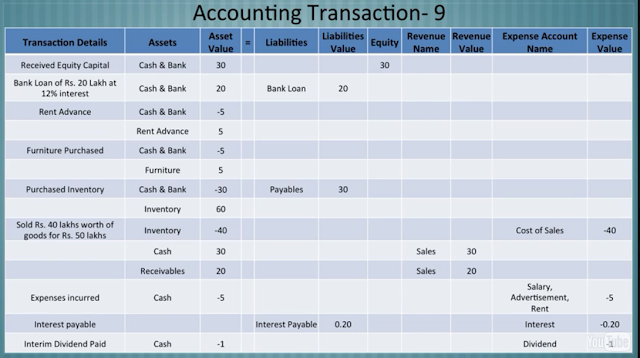
    Learn how simple Balance Sheet Preparation is, you will easily understand logic behind this with this Image presentation posted below:

    The Accounting Equation is a fundamental concept in accounting that represents the relationship between a company’s assets, liabilities, and equity. The equation is as follows:

    Assets = Liabilities + Equity

    The accounting equation must always be in balance, which means that the total assets of a company must equal the sum of its liabilities and equity. Every financial transaction affects the accounting equation, and it is important for accountants to understand how transactions affect each of the three components of the equation.

    Let’s look at a few examples of transactions and how they affect the accounting equation:

    1. A company receives $10,000 cash from a customer for services rendered. This transaction increases the company’s cash account (an asset) by $10,000. Since there is no corresponding increase in liabilities or equity, the accounting equation becomes:

    Assets = Liabilities + Equity $10,000 = 0 + $10,000

    1. The company purchases $5,000 worth of supplies on credit. This transaction increases the company’s supplies account (an asset) by $5,000, but it also increases the company’s accounts payable account (a liability) by $5,000 since the company has not yet paid for the supplies. The accounting equation becomes:

    Assets = Liabilities + Equity $15,000 = $5,000 + $10,000

    1. The company pays $1,000 in cash for rent. This transaction decreases the company’s cash account (an asset) by $1,000, but it also decreases the company’s retained earnings (a component of equity) by $1,000 since the company’s net income is reduced by the rent expense. The accounting equation becomes:

    Assets = Liabilities + Equity $14,000 = $5,000 + $9,000

    In summary, every transaction in accounting affects the accounting equation by changing the values of assets, liabilities, and equity. It is essential for accountants to keep track of these changes to ensure that the accounting equation remains in balance.

    This image has an empty alt attribute; its file name is Screenshot_10.png
    Transaction Image to learn Accounting Transaction in more detail: Image for educational purpose only just used for Balance Sheet preparation

    Pages: 1 2 3 4

  • Introduction – The Accounting Equation

    Introduction – The Accounting Equation

    From the large, multi-national corporation down to the corner beauty salon, every business transaction will have an effect on a company’s financial position. The financial position of a company is measured by the following items:

    1. Assets (what it owns)
    2. Liabilities (what it owes to others)
    3. Owner’s Equity (the difference between assets and liabilities)

    The accounting equation (or basic accounting equation) offers us a simple way to understand how these three amounts relate to each other. The accounting equation for a sole proprietorship is:

    14x-simple-table-01a

    The accounting equation for a corporation is:

    14x-simple-table-01b

    Assets are a company’s resources—things the company owns. Examples of assets include cash, accounts receivable, inventory, prepaid insurance, investments, land, buildings, equipment, and goodwill. From the accounting equation, we see that the amount of assets must equal the combined amount of liabilities plus owner’s (or stockholders’) equity.Liabilities are a company’s obligations—amounts the company owes. Examples of liabilities include notes or loans payable, accounts payable, salaries and wages payable, interest payable, and income taxes payable (if the company is a regular corporation). Liabilities can be viewed in two ways:(1) as claims by creditors against the company’s assets, and
    (2) a source—along with owner or stockholder equity—of the company’s assets.Owner’s equity or stockholders’ equity is the amount left over after liabilities are deducted from assets:Assets – Liabilities = Owner’s (or Stockholders’) Equity.Owner’s or stockholders’ equity also reports the amounts invested into the company by the owners plus the cumulative net income of the company that has not been withdrawn or distributed to the owners.If a company keeps accurate records, the accounting equation will always be “in balance,” meaning the left side should always equal the right side. The balance is maintained because every business transaction affects at least two of a company’s accounts. For example, when a company borrows money from a bank, the company’s assets will increase and its liabilities will increase by the same amount. When a company purchases inventory for cash, one asset will increase and one asset will decrease. Because there are two or more accounts affected by every transaction, the accounting system is referred to as double-entry accounting.A company keeps track of all of its transactions by recording them in accounts in the company’s general ledger.Each account in the general ledger is designated as to its type: asset, liability, owner’s equity, revenue, expense, gain, or loss account.We created a visual tutorial to demonstrate how a variety of transactions will affect the accounting equation and the financial statements. It is available in AccountingCoach PRO along with test questions that pertain to the accounting equation.

    Balance Sheet and Income Statement

    The balance sheet is also known as the statement of financial position and it reflects the accounting equation. The balance sheet reports a company’s assets, liabilities, and owner’s (or stockholders’) equity at a specific point in time. Like the accounting equation, it shows that a company’s total amount of assets equals the total amount of liabilities plus owner’s (or stockholders’) equity.The income statement is the financial statement that reports a company’s revenues and expenses and the resulting net income. While the balance sheet is concerned with one point in time, the income statement covers a time interval or period of time. The income statement will explain part of the change in the owner’s or stockholders’ equity during the time interval between two balance sheets.

    Introduction to the Accounting Equation  From the large, multi-national corporation down to the corner beauty salon, every business transaction will have an effect on a company's financial position. The financial position of a company is measured by the following items:      Assets (what it owns)     Liabilities (what it owes to others)     Owner's Equity (the difference between assets and liabilities)  The accounting equation (or basic accounting equation) offers us a simple way to understand how these three amounts relate to each other. The accounting equation for a sole proprietorship is: 14x-simple-table-01a  The accounting equation for a corporation is: 14x-simple-table-01b  Assets are a company's resources—things the company owns. Examples of assets include cash, accounts receivable, inventory, prepaid insurance, investments, land, buildings, equipment, and goodwill. From the accounting equation, we see that the amount of assets must equal the combined amount of liabilities plus owner's (or stockholders') equity.  Liabilities are a company's obligations—amounts the company owes. Examples of liabilities include notes or loans payable, accounts payable, salaries and wages payable, interest payable, and income taxes payable (if the company is a regular corporation). Liabilities can be viewed in two ways:  (1) as claims by creditors against the company's assets, and (2) a source—along with owner or stockholder equity—of the company's assets.  Owner's equity or stockholders' equity is the amount left over after liabilities are deducted from assets:      Assets - Liabilities = Owner's (or Stockholders') Equity.  Owner's or stockholders' equity also reports the amounts invested into the company by the owners plus the cumulative net income of the company that has not been withdrawn or distributed to the owners.  If a company keeps accurate records, the accounting equation will always be

    Thanks for Reading.

10 morning habits Embark on Your Writing Journey: A Beginner’s Guide Positive life with positive people mustreadbooks Business Startup